Hot Pavement, Hot Cars, Hot Dogs
The Summer Stuff That Actually Matters “and the parts most people still get wrong”
The summer dangers for dogs are not new information. We all know the headlines. And yet every year, vets see the same emergencies, and every year, some of them don’t end well.
So. This isn’t a lecture. It’s the version of the summer talk I’d give you if we were sitting on my porch with iced tea and your dog at our feet. Reminding all of us that summer is upon us and we have new things to consider to keep our dogs safe!
Pavement is hotter than you think. And the test you have heard about works.
You’ve probably seen the seven-second rule: put the back of your hand on the pavement, and if you can’t hold it there for seven seconds, it’s too hot for your dog’s paws. It’s not a gimmick. It’s a real shortcut for assessing risk before a walk.
Pavement gets significantly hotter than the air around it. Asphalt sitting in direct sun can climb well past the point where it can burn paw pads, even on days that feel mild. On a sunny day with air in the high 70s, dark pavement in direct sun has been measured well over 120°F, hot enough to burn skin in under a minute. And the pavement doesn’t cool down the moment the sun goes behind a cloud or the second you step into the shade. It holds heat for hours.
At the beach, sand can be quite hot too. I am sure you have walked barefoot on a beach and quickly run or grabbed your sandals.
If you walk your dog in the summer, walk early. Like, really early. Before 8 a.m. is ideal, and after 8 p.m. is usually safer, but check the pavement first. Grassroots are your friend. So is the boring loop through the shaded side of the neighborhood instead of the scenic one along the open sidewalk.
And if your dog suddenly lifts a paw, lies down, or refuses to keep walking on a hot day? Listen. They’re telling you something, and you should listen.
Cars. I know you know. Read this anyway.
I’m not going to write a lot of words here because if you’re reading this, you already know not to leave your dog in a hot car. But here’s what people underestimate.
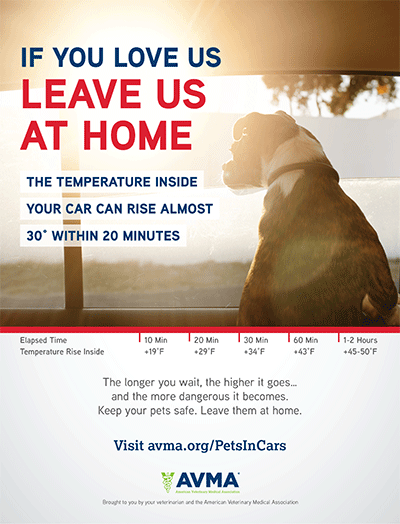
According to the American Veterinary Medical Association, the temperature inside a parked car can rise about 20 degrees in just 10 minutes, and nearly 30 degrees in 20 minutes. After one hour, the interior can be more than 40 degrees hotter than the air outside. That means a 70-degree day turns into a 110-degree car. Cracked windows do almost nothing. Shade helps for a few minutes and then stops helping. “I’ll just be a second” turns into ten when the line is long, when you run into someone you know, when the cashier needs a manager.
If the errand isn’t one where your dog can come inside with you, the errand isn’t one your dog should come on. That’s the whole rule. It’s not complicated; it’s just inconvenient sometimes, and inconvenience is a much smaller cost than the alternative.
I can sadly say I know of dogs that did not have a good ending due to the heat of a vehicle, with unsuspecting handlers.
Heat stress doesn’t look the way you’d expect.
This is the part I want people to remember most, because it’s where things turn from uncomfortable to dangerous, and the early signs are easy to miss.
Heavy panting is normal in summer. Excessive, frantic panting that doesn’t slow down when your dog rests is not. Bright red gums and tongue, thick or stringy drool, wobbliness, glazed eyes, a dog who seems “off” or won’t engage with you. These are signs your dog is overheating and needs help right now.
By the time you see vomiting or your dog collapsing, you’re in an emergency. Don’t wait that long.
If you suspect heat stress, get your dog into shade or air conditioning immediately. Offer small amounts of cool (not ice-cold) water. Wet their belly, paws, and the inside of their ears with cool water. And call your vet. Even if your dog seems to bounce back, internal damage from heat stroke can show up hours later. A vet check is not overkill.
The dogs at higher risk
A few breeds need extra caution. Brachycephalic breeds, your pugs, bulldogs, Frenchies, and boxers, cannot cool themselves as efficiently as other dogs and overheat faster. So do senior dogs, overweight dogs, dogs with heart conditions, and very young puppies. Black dogs and thick-coated breeds absorb and trap heat more.
If your dog is in any of these categories, the standard summer advice isn’t strict enough. They need shorter walks, earlier starts, and more rest than the average dog. That’s not babying them. That’s matching the plan to the dog.
What summer is actually for
Here’s the part I want to end on because the warnings can start to feel like a list of things not to do with your dog. Summer with a dog is wonderful. Mornings on the trail before it gets warm. Splashing through a kiddie pool in the backyard. Frozen Kongs on the porch. Lake days. Sniff walks at dusk when the air finally cools.
The point of all of this isn’t to keep your dog inside until October. It’s to plan around the heat instead of pretending it isn’t there. The dogs who do best in summer have humans who shift the schedule, not humans who push through it.
Pay attention to your dog. Adjust when you need to. And enjoy the season — both of you.
🐾 At Enjoy Your Dog Training, we want every season to be one your dog can actually enjoy. If you’ve noticed your dog struggling more in summer with the heat, the noise, the disrupted routine, or anything else. We’re here to help build a plan that fits your real life.